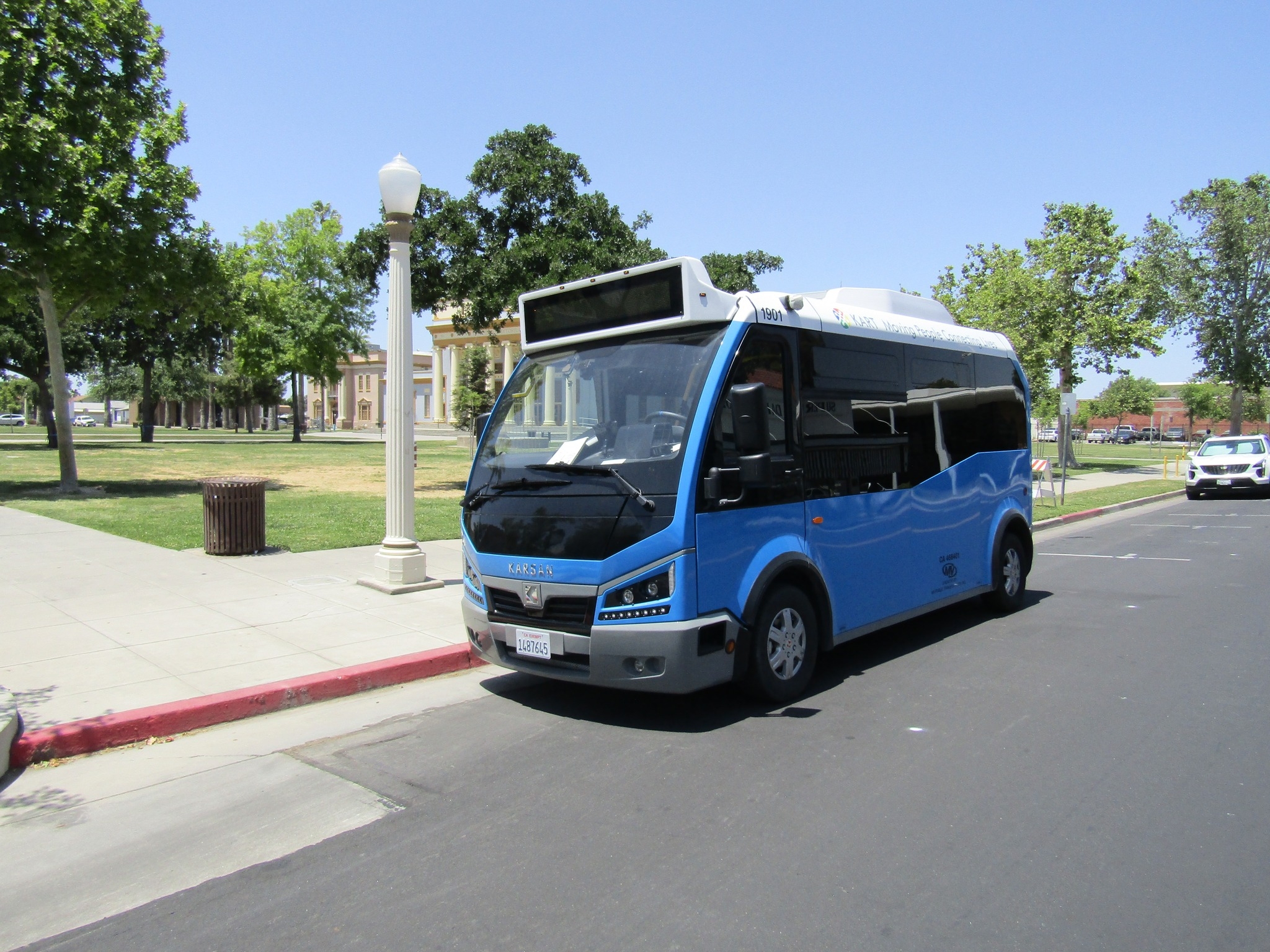
Kings County Area Public Transit (KART), California
No items found.
Kings County Area Public Transit (KART) is the public rural and urban transportation provider serving Hanford, Lemoore, and surrounding communities in Kings County, California.
KART operates:
With a strong focus on accessibility, affordability, and community connection, KART’s mission is reflected in its motto: “Moving People, Connecting Lives.”
As a forward-looking rural transit agency, KART committed to transitioning toward a zero-emission fleet with a long-term goal of achieving full electrification by 2035.

Angie Dow, the head of Kings County Transit says stated: “We know that green transit is the future, but we struggled to find a zero-emission vehicle that worked for small and rural transit systems. Our search eventually led us to the JEST — a purpose-built, full-lifecycle bus that is easy on the transit budget. We are excited to be taking this step.”
Like many small and rural agencies, KART faced a common challenge:
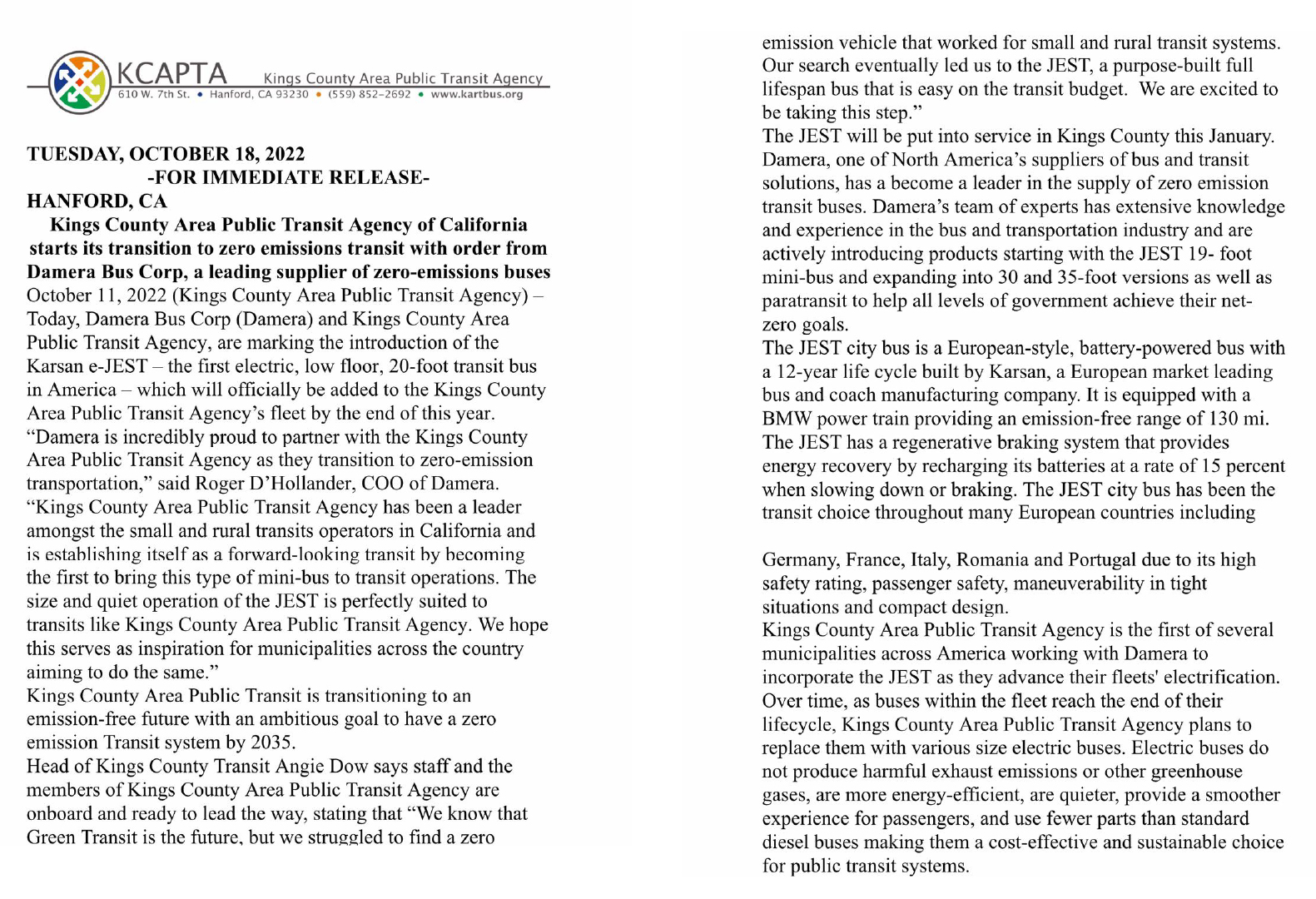
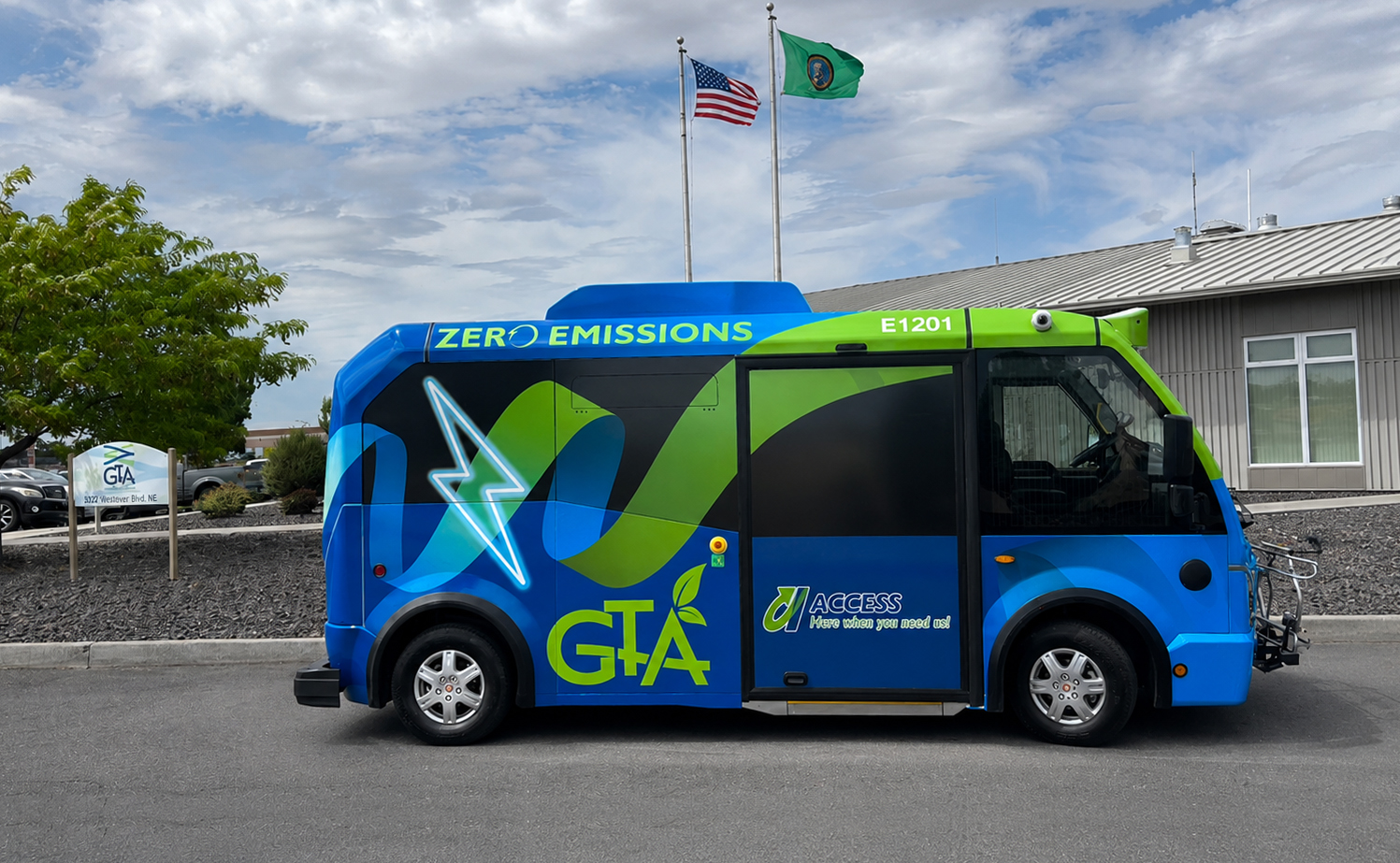
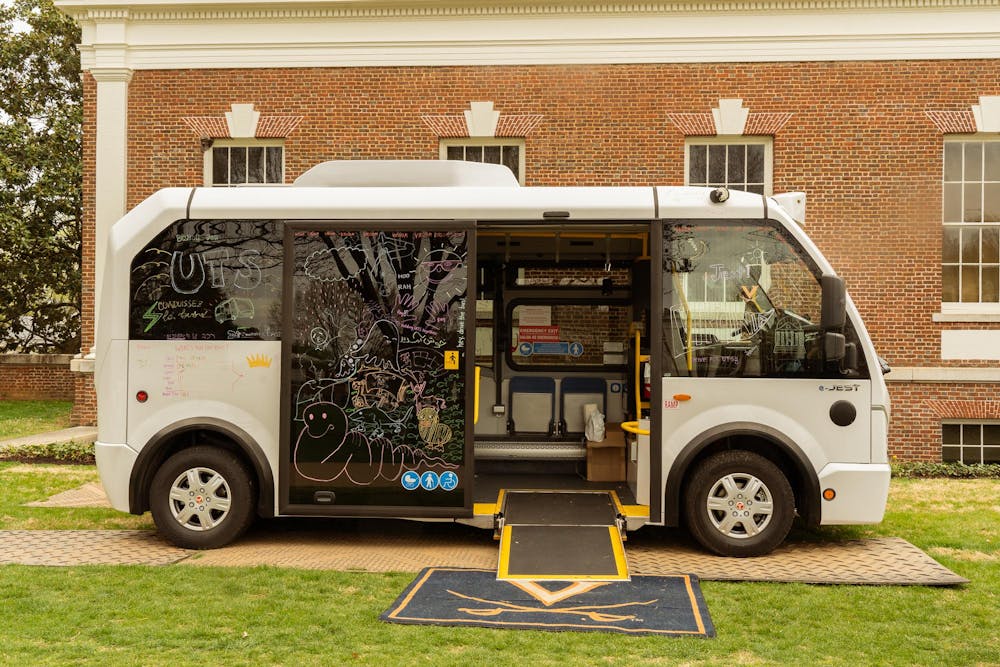
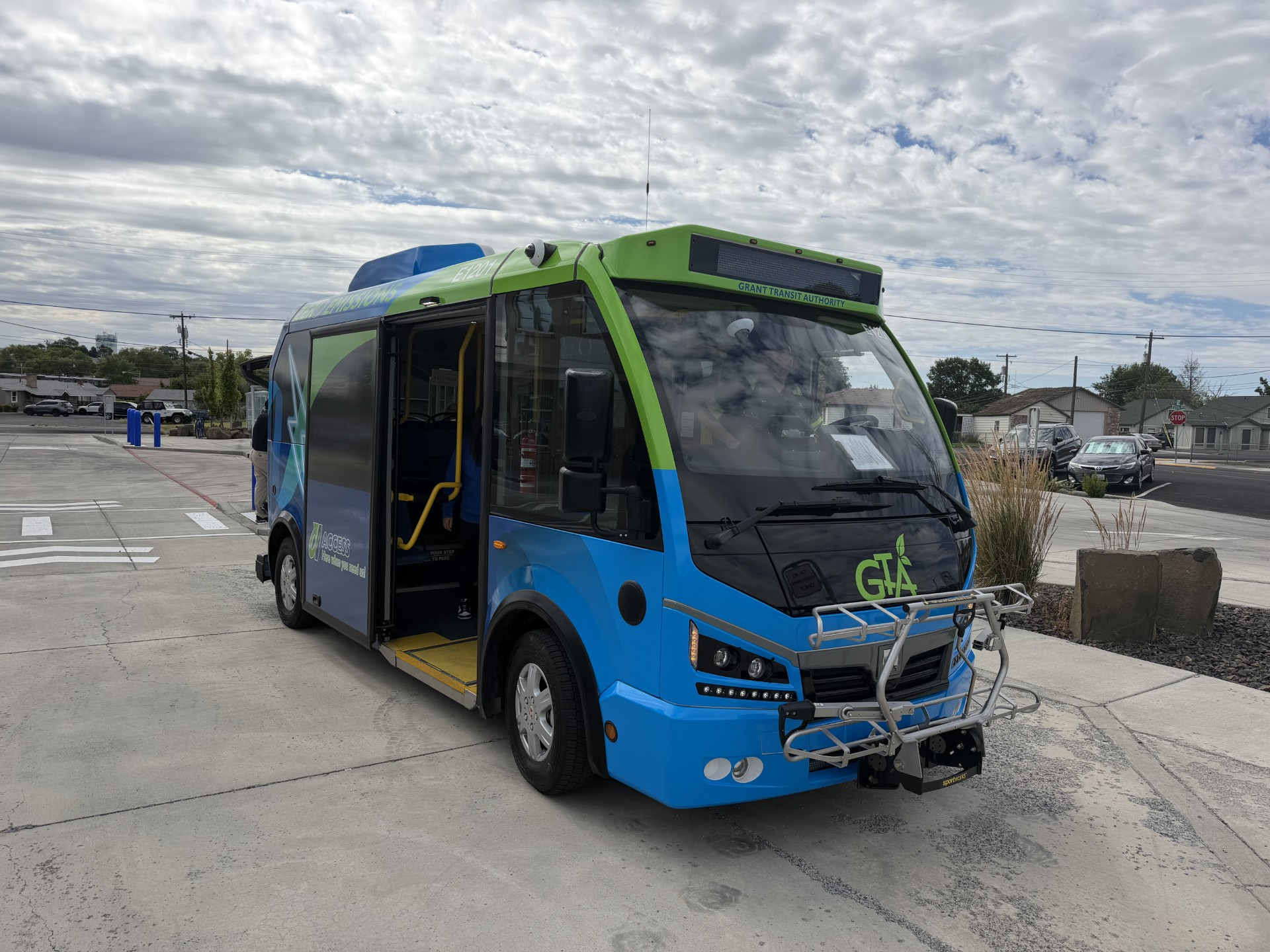
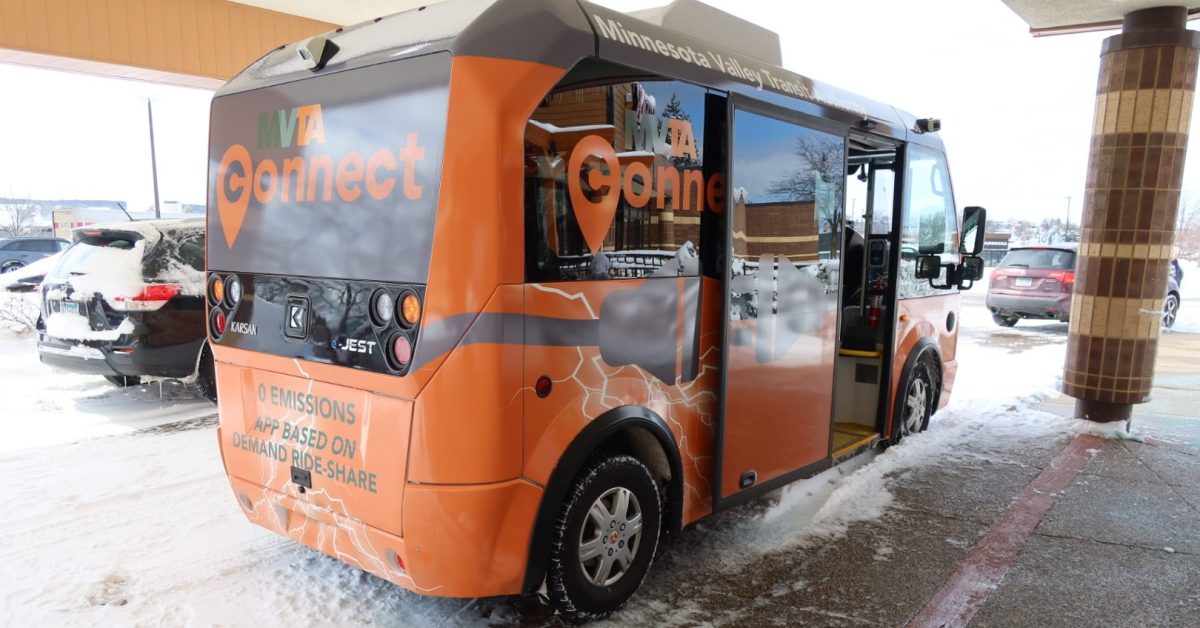
After evaluating available options, KART selected the Karsan eJEST, becoming one of the first agencies in the United States to introduce this 20-foot, low-floor electric transit bus into revenue service.
eJEST size and modern look and features make it ideal for:
The first vehicle was delivered in March 2023.
Today, KART operates two eJEST buses, primarily deployed in its GoKART on-demand program.

Damera COO Roger D’Hollander said “Damera is incredibly proud to partner with the Kings County Area Public Transit Agency as they transition to zero-emission transportation. Kings County Area Public Transit Agency has been a leader among small and rural transit operators in California and is establishing itself as a forward-looking transit agency by becoming the first to bring this type of mini-bus into transit operations. The size and quiet operation of the JEST are perfectly suited to transit systems like Kings County Area Public Transit Agency. We hope this serves as inspiration for municipalities across the country aiming to do the same.”
Kings County Area Public Transit is advancing its transition to a fully zero-emission fleet, with a target of achieving this goal by 2035.
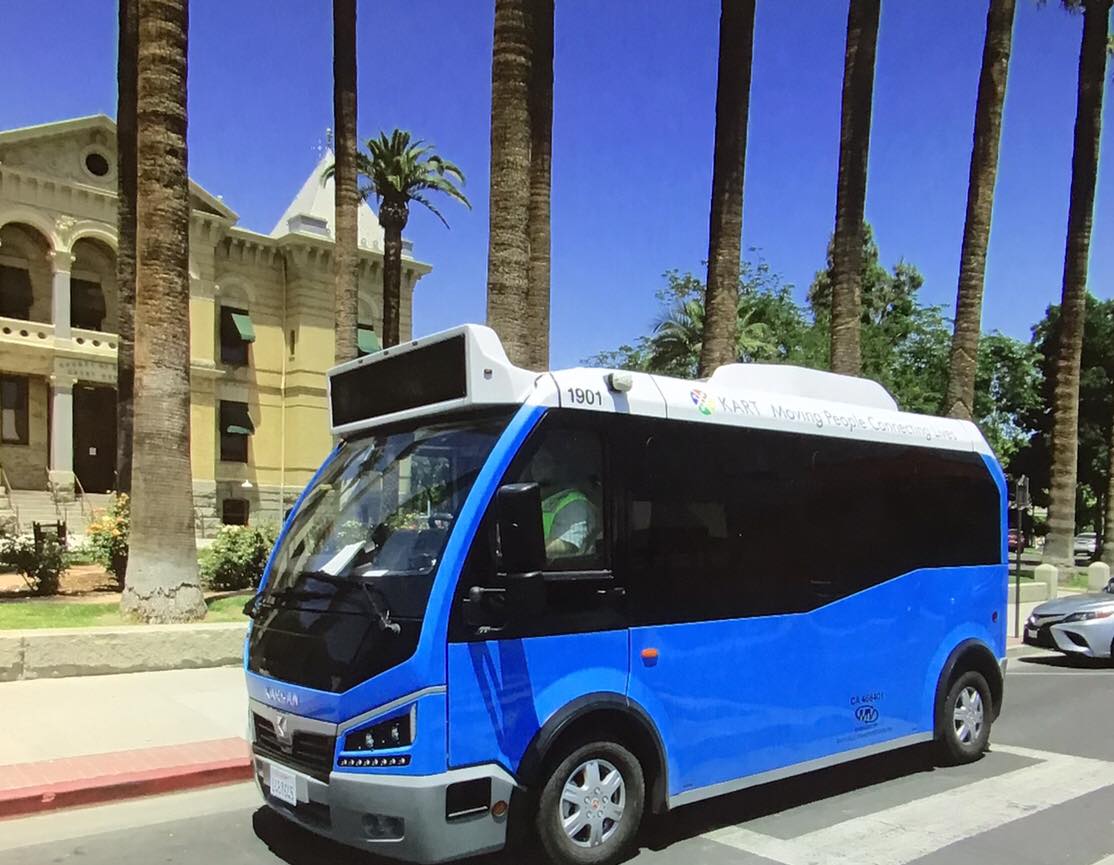
Kings County combines rural geography with urban service demands. Running large 40-foot buses on lower-demand routes is inefficient and costly.
The eJEST provided:
The eJEST is used primarily in KART’s GoKART on-demand program, which allows riders to:
The vehicle’s right-sized capacity aligns with on-demand service patterns:
Electric operation enhances the rider experience with:
KART operates ADA-aligned paratransit and shared ride services. Accessibility is foundational to their operations.
The eJEST is available to support this through:
For agencies serving seniors and riders with disabilities, this design directly improves passenger experience.
We are excited to bring the newest in electric bus technology to America and help put it into service here in Kings County," said Roger D'Hollander, COO, Damera. "Transitioning to clean transportation is the right thing to do for our health and environment, and it's the smart thing to do for our communities in terms of efficiency and cost savings."
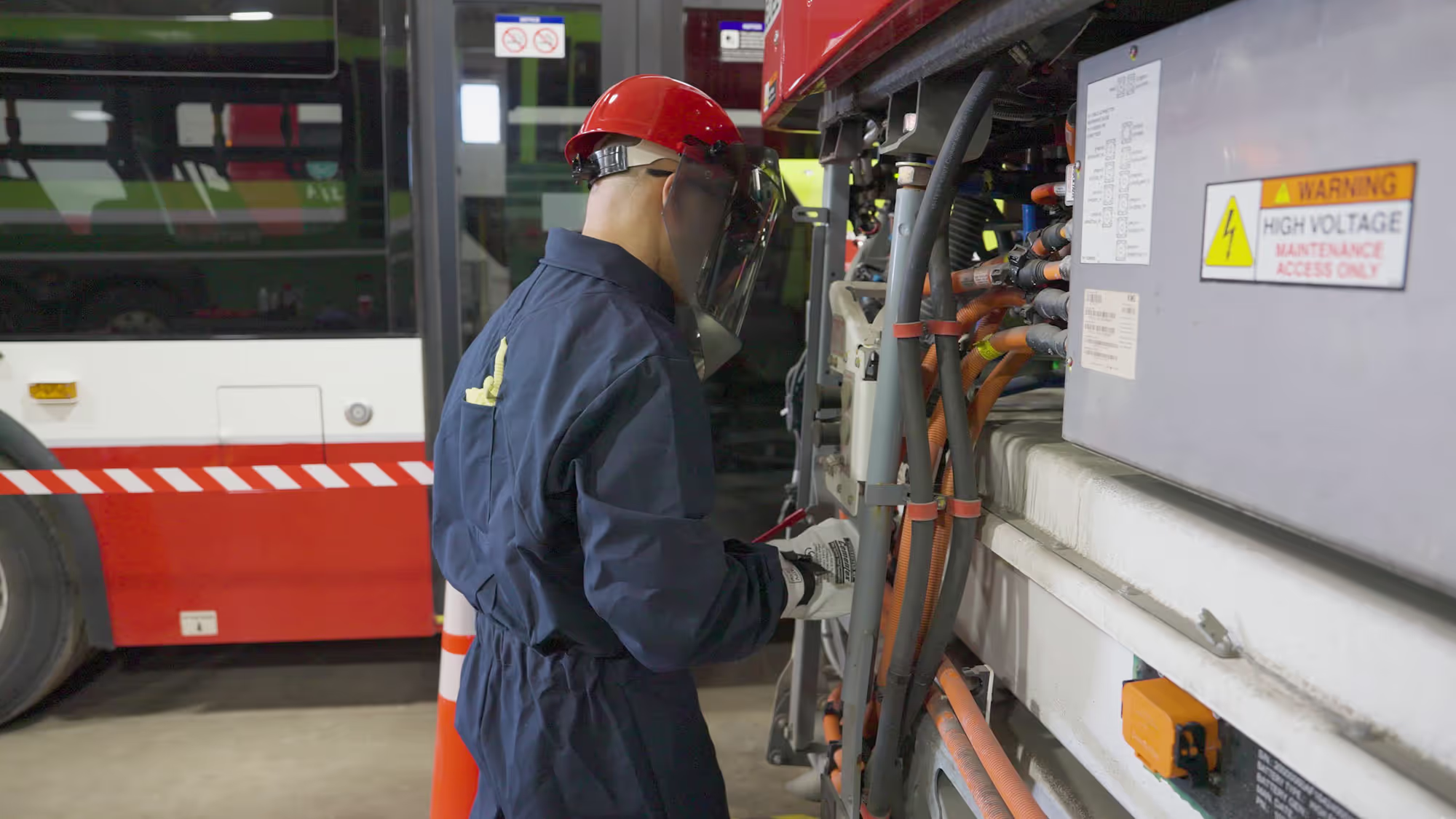
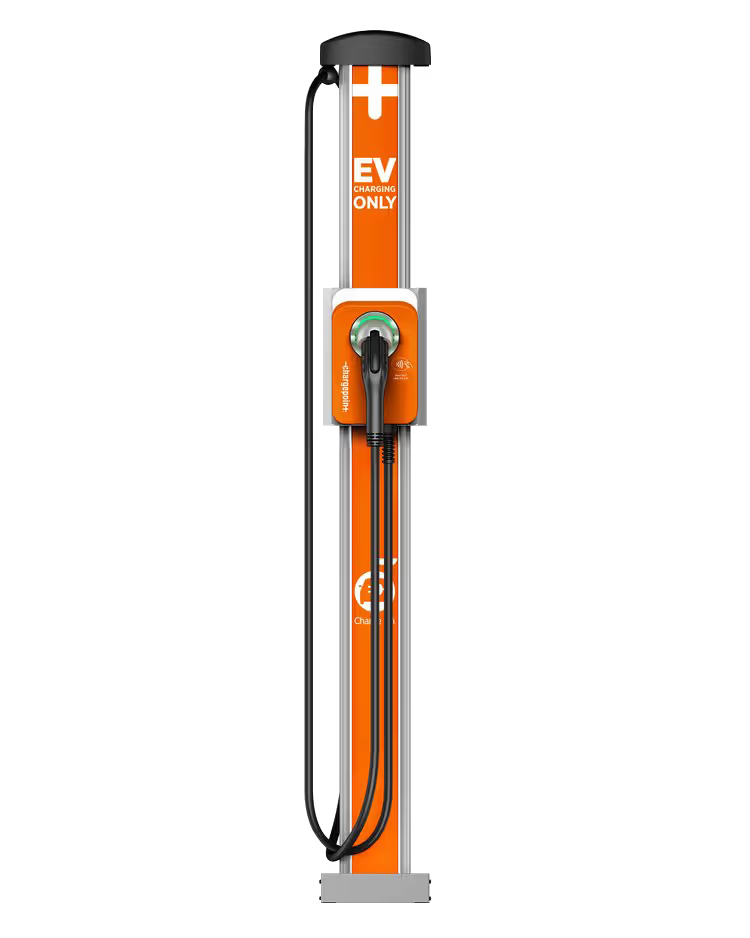
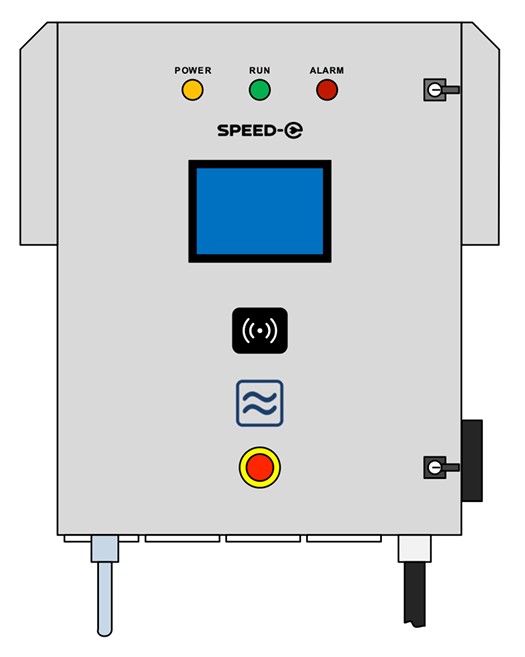
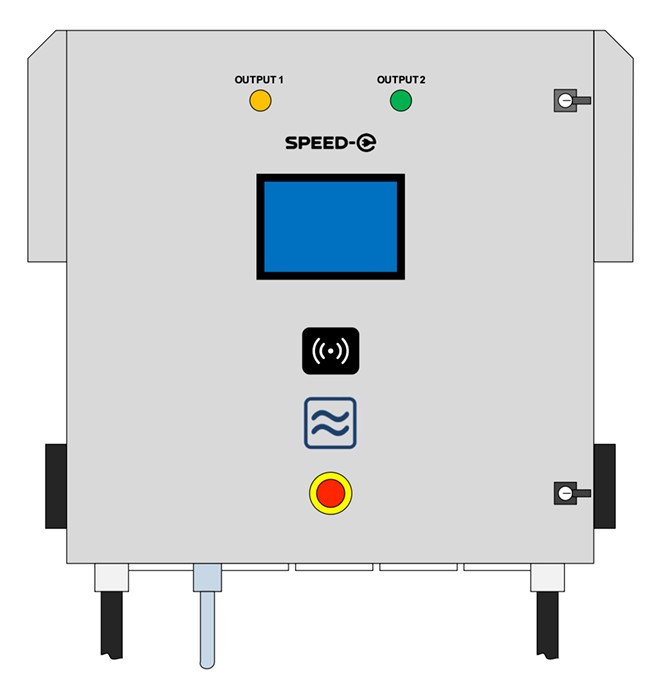
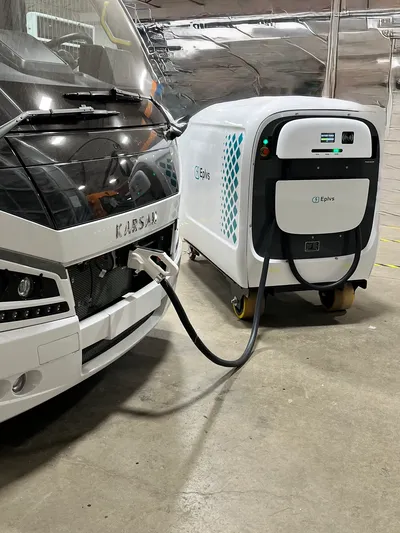
KART supports its eJEST buses utilizing:
The charging solution allows manageable electrification without full depot reconstruction — an important factor for small and rural agencies beginning their transition.
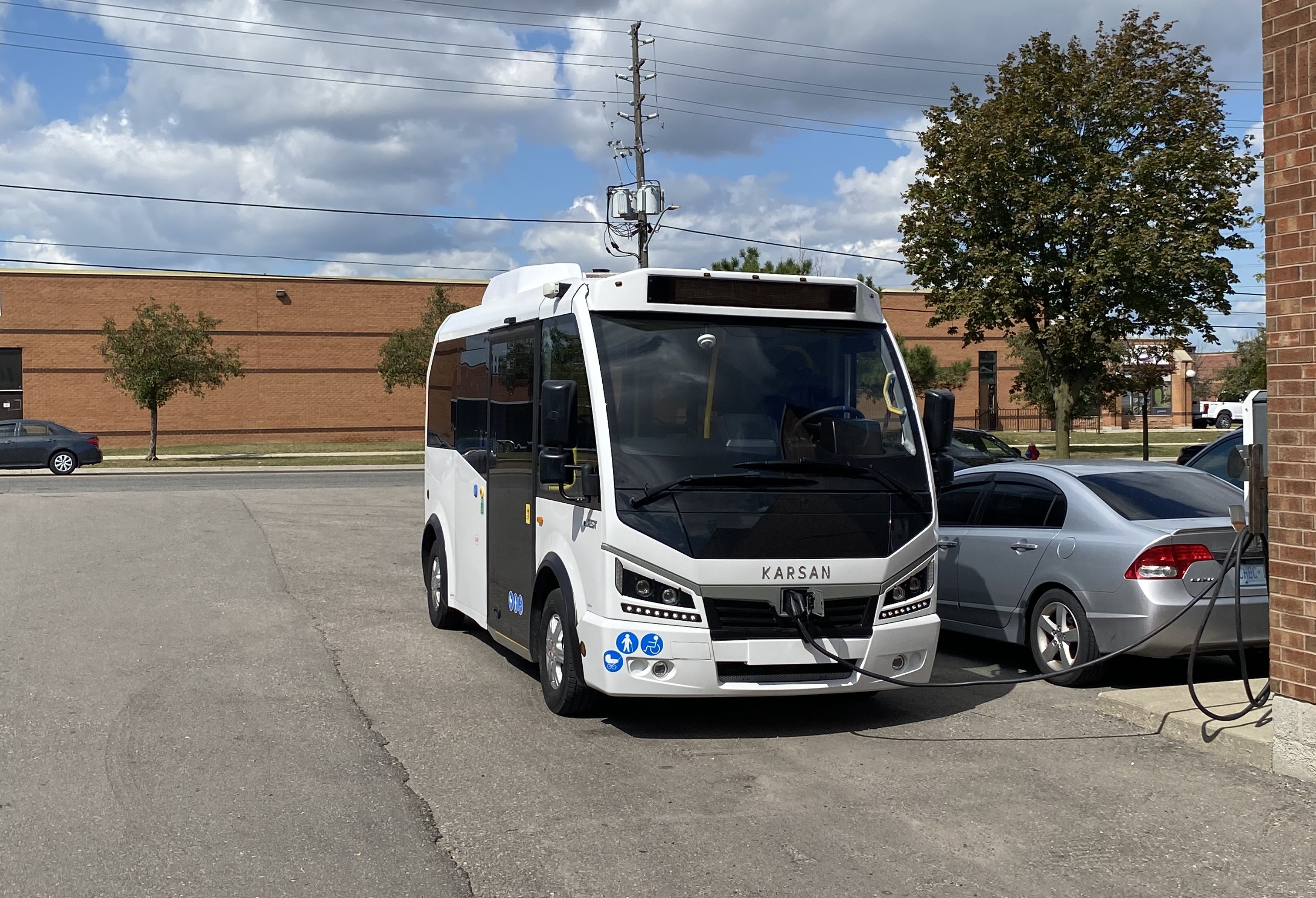
Electrification requires more than delivering a vehicle.
It requires:
As with many first-time electric deployments, there is a learning curve.
Damera is always ready to work closely through the transition phase to ensure the vehicles are fully integrated into daily service.
Today, KART is successfully operating its eJEST buses and advancing its zero-emission goals with confidence.
The introduction of the eJEST supports:
✔ Lower emissions
✔ Reduced fuel dependency
✔ Quieter community operation
✔ Smoother passenger experience
✔ Scalable electrification pathway
✔ Alignment with California’s environmental mandates
For a rural agency, electrification must be practical. The eJEST allows KART to modernize without overextending infrastructure or capital budgets.
Kings County demonstrates that:
KART is part of a growing group of North American agencies integrating the eJEST as a practical electrification solution.
KART’s approach to transit goes beyond simply operating routes — it actively connects with the community it serves. From rider surveys and outreach initiatives to public celebrations, KART positions transit as a visible and welcoming part of daily life in Kings County.
A great example of this engagement was the participation of the Karsan eJEST in a local Christmas parade. Instead of being seen only as a utility vehicle, the eJEST became part of a community event — decorated, photographed, and shared across social media. Residents usually describe it as “cute,” modern, and different from traditional buses. That reaction matters.
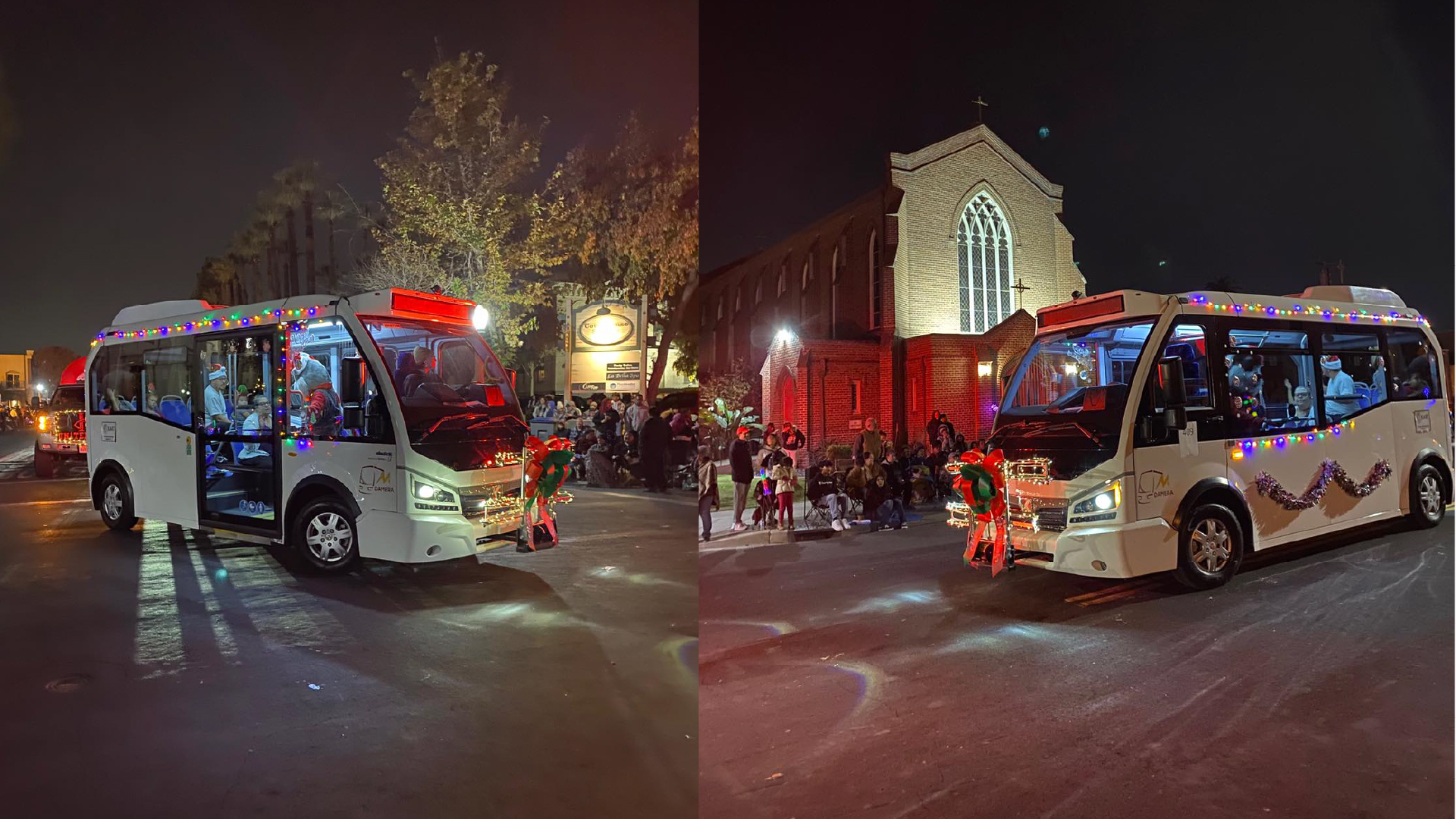
When a vehicle creates positive emotional engagement, it changes how people perceive transit. A bus that feels approachable and contemporary lowers psychological barriers to trying public transportation — especially for first-time riders, families, and younger passengers.
The eJEST’s compact design, quiet electric operation, and low-floor accessibility contribute to this experience. It doesn’t feel oversized or intimidating on smaller streets. It feels integrated into the community. And that feeling supports ridership growth.
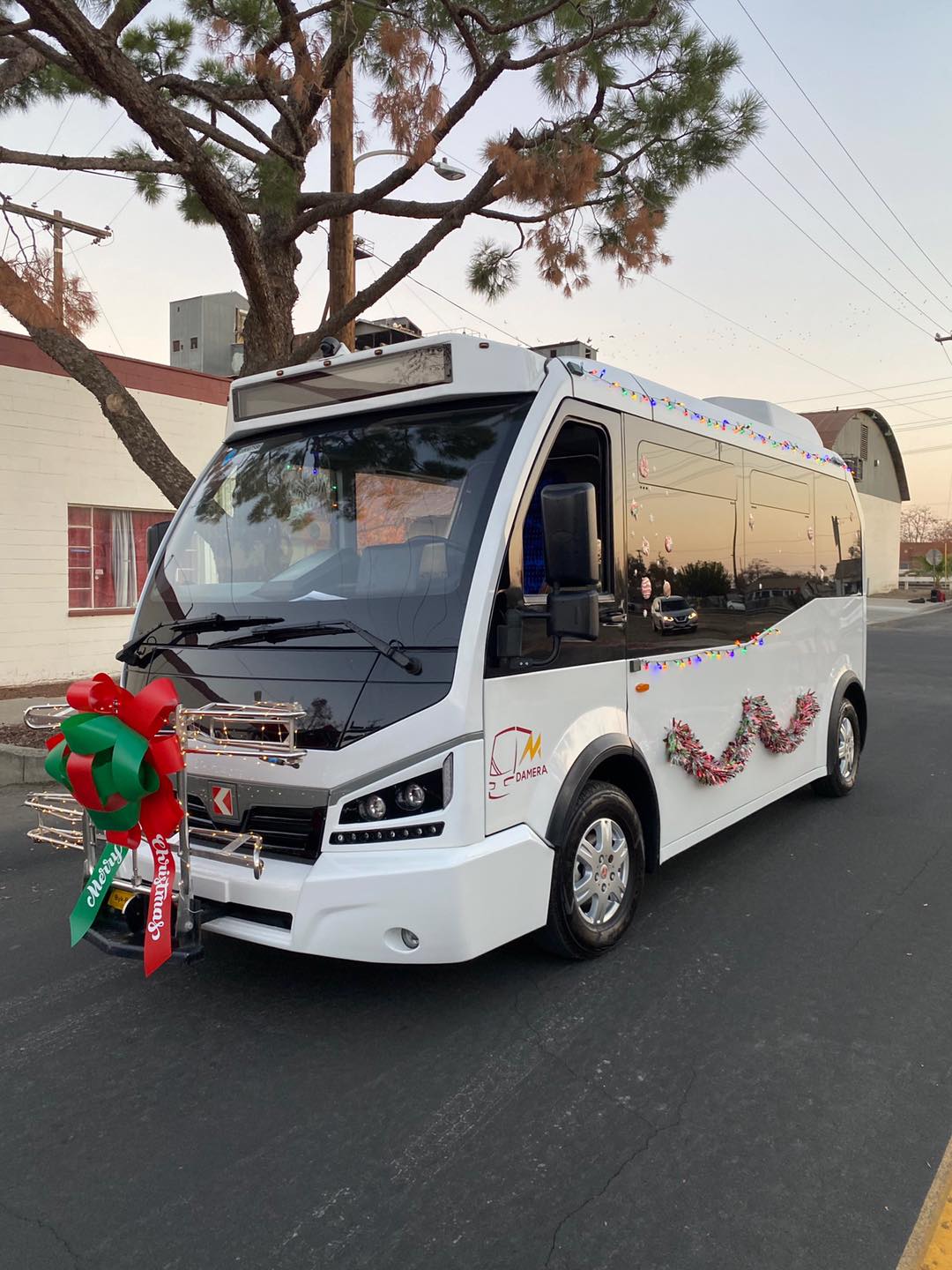
In programs like GoKART on-demand service, where flexibility and community trust are essential, a vehicle that riders are genuinely willing — even excited — to use becomes an asset beyond specifications. It becomes part of the transit identity.
By combining zero-emission performance with community presence, KART demonstrates that electrification is not only about compliance or sustainability goals. It is also about improving how transit feels — and that feeling can directly influence ridership and long-term success.
Damera provides more than vehicle supply.
With decades of experience in heavy-duty fleet support, Damera brings:
This combination reduces deployment risk and supports long-term operational stability.
The eJEST serves as a scalable entry point — proving that electrification can begin with the right vehicle, in the right application, at the right size.


A quiet, efficient, fully accessible electric minibus. The eJEST delivers exceptional maneuverability, low operating costs, and smooth passenger experience.
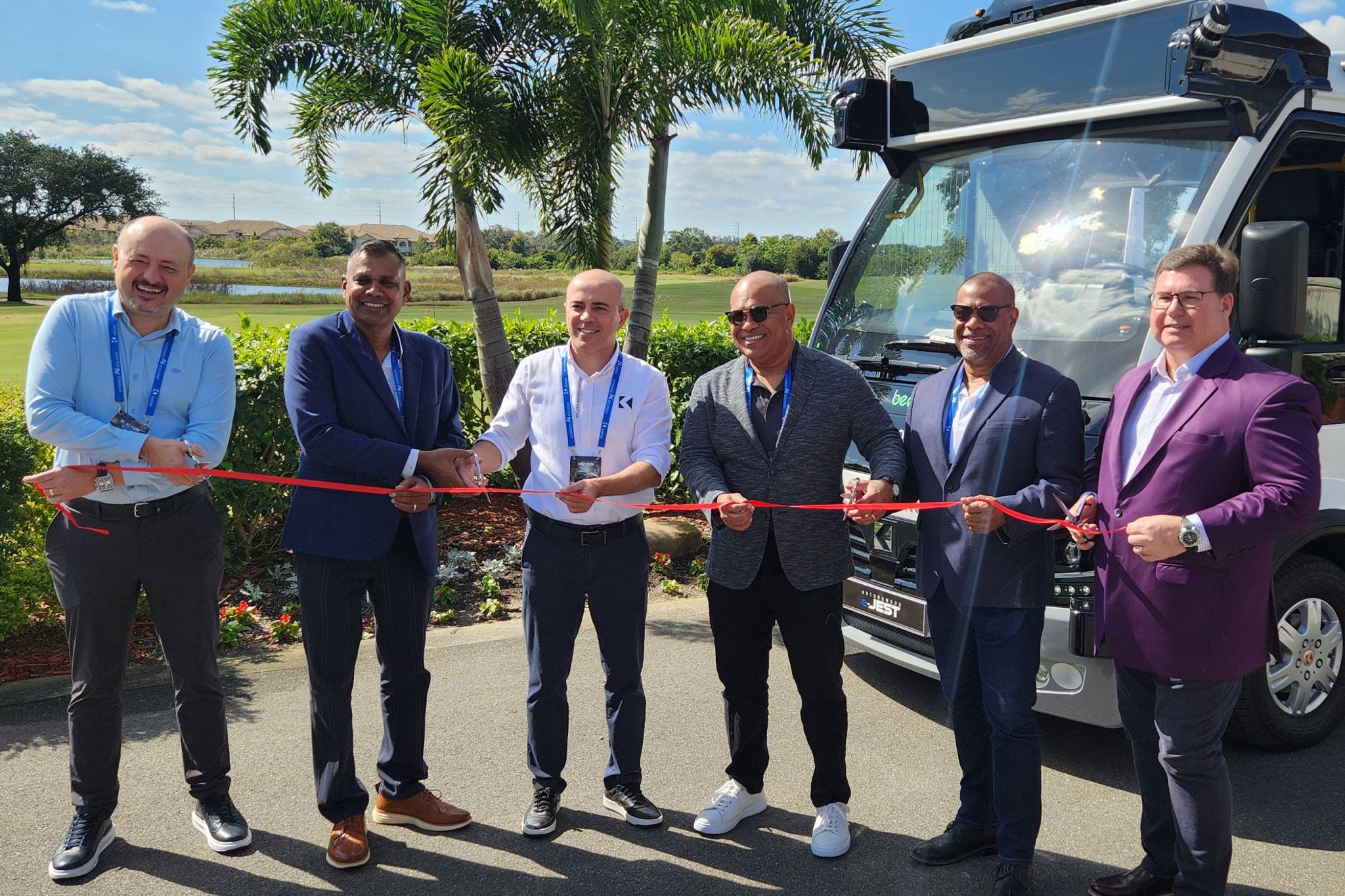
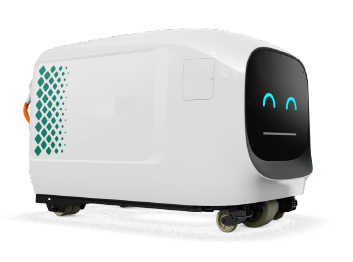
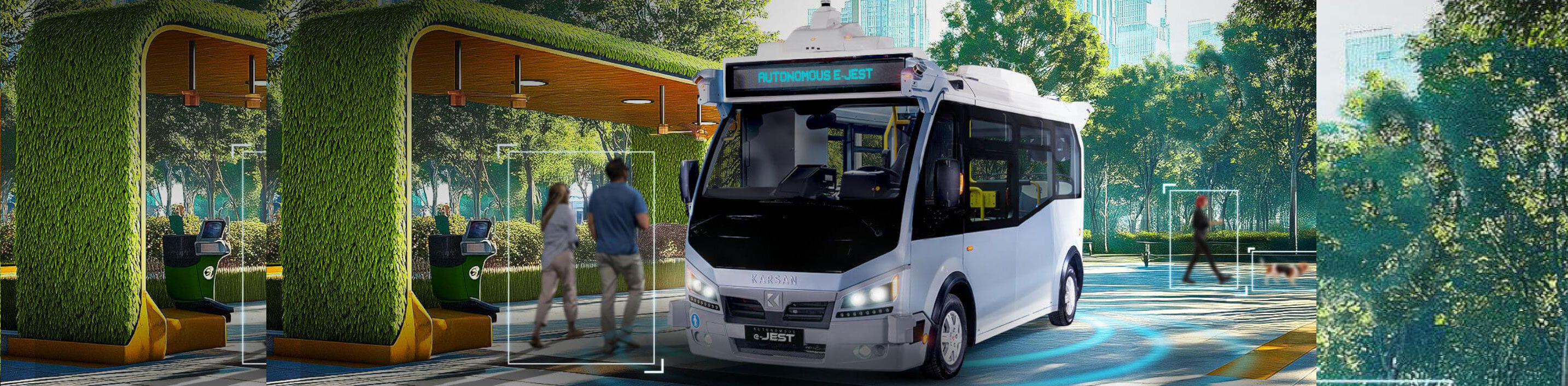
Built on the proven eJEST platform and automated by ADASTEC, this Level-4 autonomous minibus brings reliable, safe, and fully accessible automated transit to real-world routes.






.svg)






.jpeg)


.svg.avif)




-p-500-p-500.avif)






.svg)